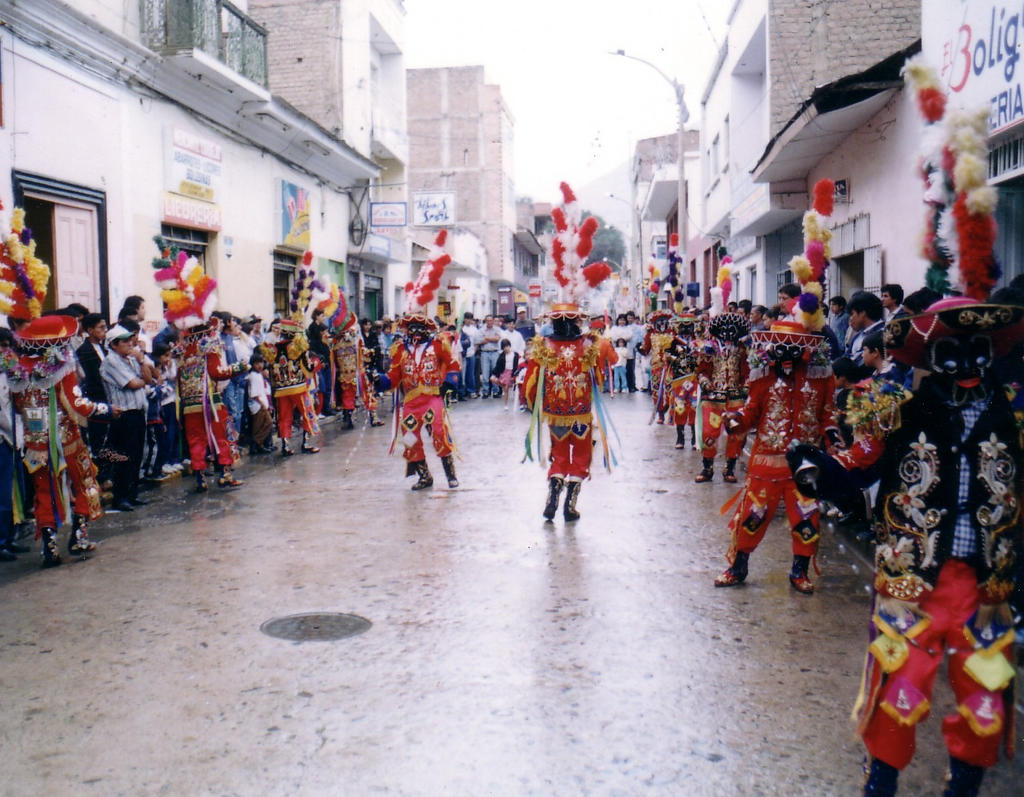
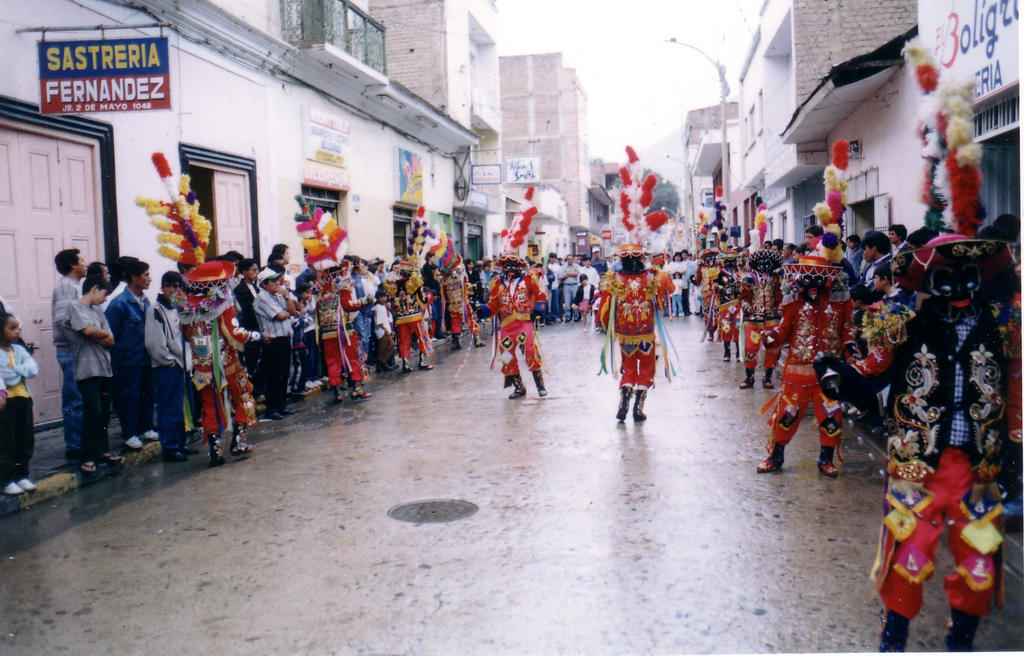
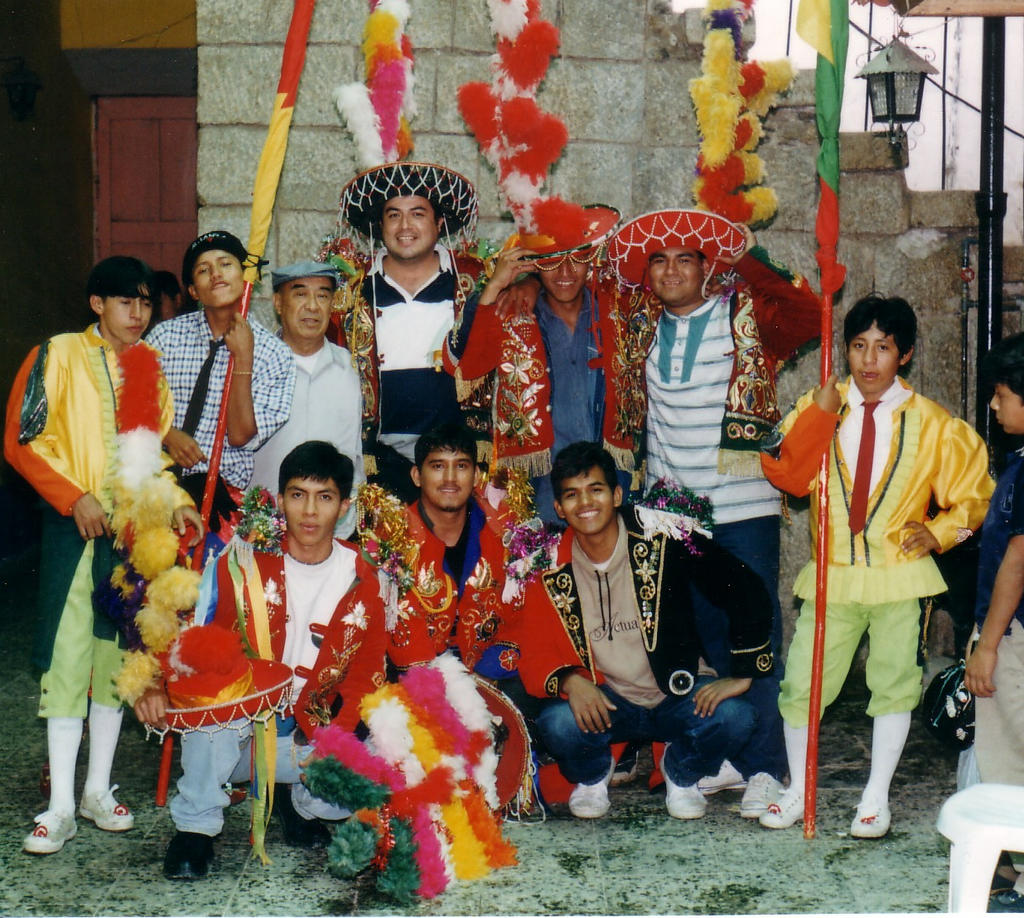
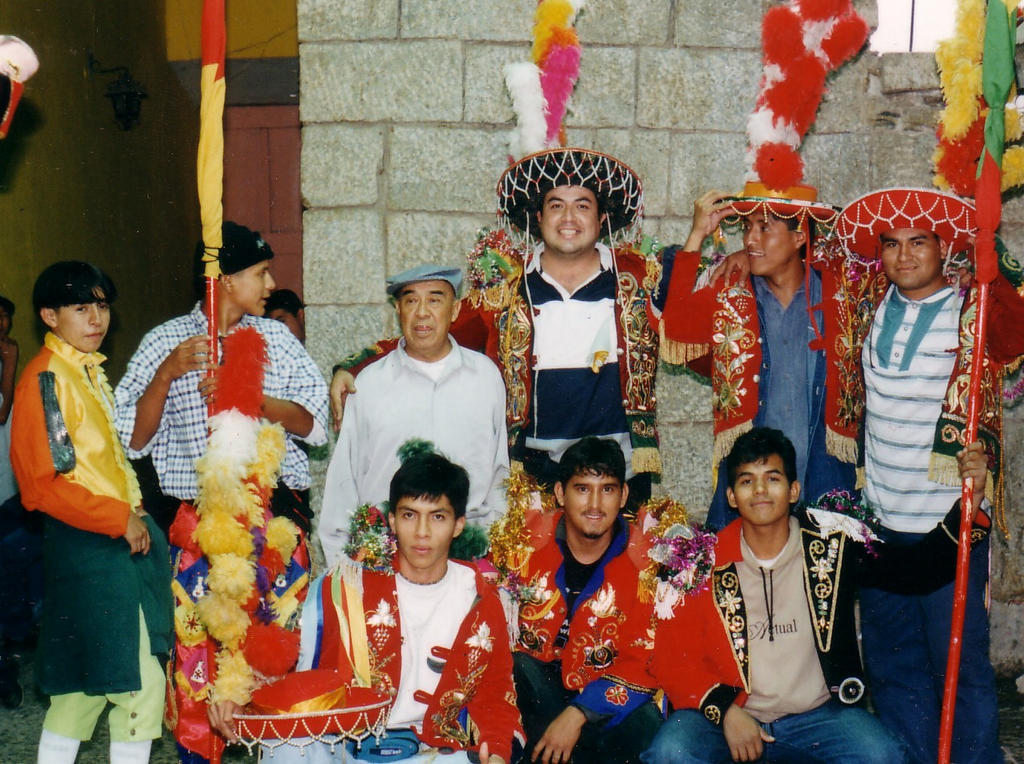
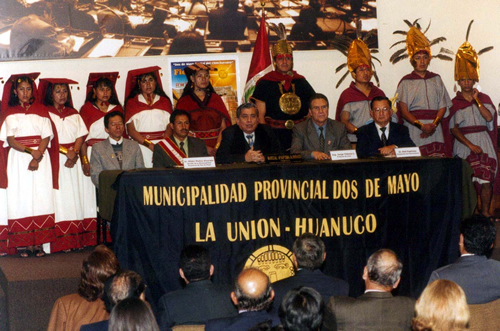
been many years since he was born the Dance of the Negritos in the Colony, and still retained a tradition that supports an identity, awareness of a living history, illustrative. No doubt the folk painting, an extraordinary "Ballet Popular, the most transcendent, timeless and unique, that to the proud Huanuco.
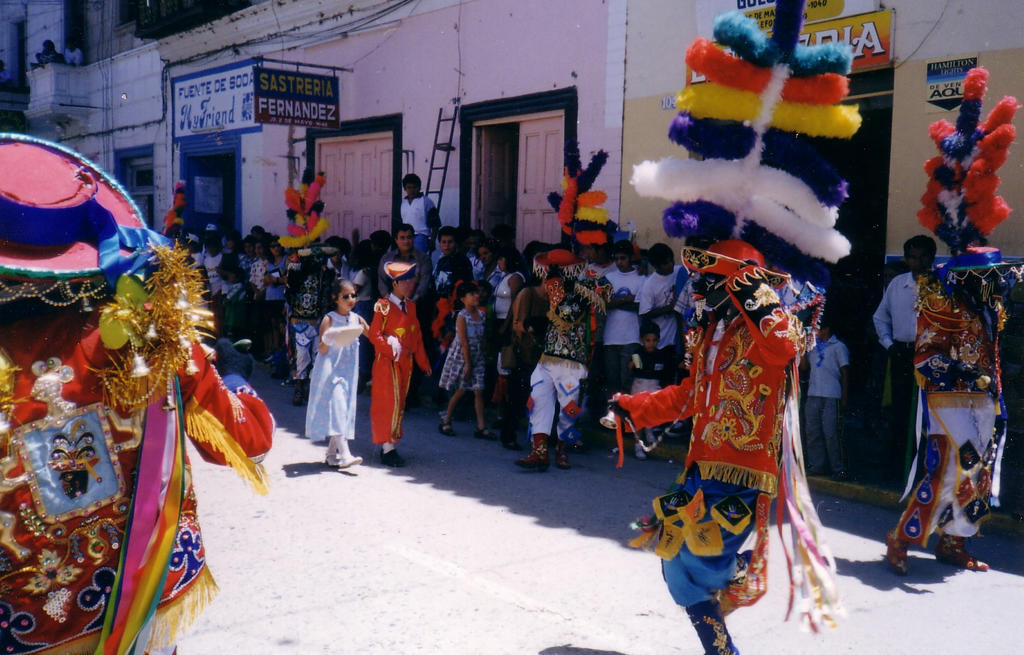
is very difficult for anyone to ignore a band of dancers, slaves, dressed colorfully, congested streets city. Nobody can imagine a Huánuco, without bold, all are recorded in the memory of two foremen, dressed in "coton" which is the English coat of silk velvet, with them a gang of black pampas, an old and grumpy "corochano "a beautiful and unpretentious woman with a proud" Turk "and other colorful characters.
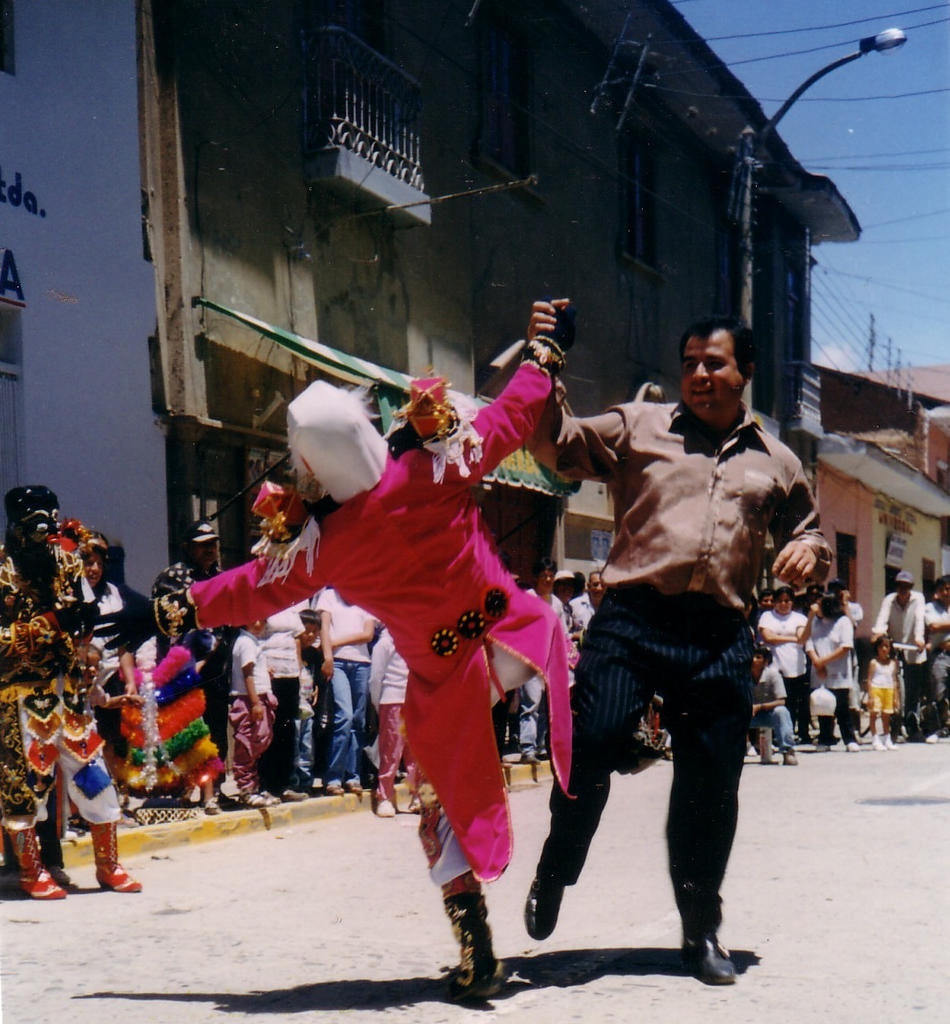
children jump for joy imitating the Negro, the teenager looks serene from a distance, the adult gets excited, and tourists are amazed by the beauty of this great folk picture with history. A dance that many will carry in their blood, and know that the dancers themselves.
Estrada Humberto Baca, spent 20 years dancing with the crew of "Righteous Judge Child, one of the most important today, for his rapport with the tradition, his exemplary discipline and his artistic vocation.
Economic Movement
He tells us that every year must renew their equipment, in order to maintain the level at which they are located. The cost of clothing exceeds 1.500 Nuevo Soles per person annually, which is why throughout the year, all groups make, strenuous efforts, and organized, lunch, akin to being able to gather enough money to purchase costumes , quite apart each "Bailanta" worth 10 or 20 soles per month, and so, instead of spending 1500 suns, with their activities can spend a total of 400 soles.
He tells us that every year must renew their equipment, in order to maintain the level at which they are located. The cost of clothing exceeds 1.500 Nuevo Soles per person annually, which is why throughout the year, all groups make, strenuous efforts, and organized, lunch, akin to being able to gather enough money to purchase costumes , quite apart each "Bailanta" worth 10 or 20 soles per month, and so, instead of spending 1500 suns, with their activities can spend a total of 400 soles.
economic movement is impressive, during the holidays, a gang of black boys spent no less than 25 thousand soles in regard to costumes, a band of musicians for three or four days we ask for five thousand suns, besides that must be added, the two daily visits carried out by those teams, where each person who receives, spends no less than 500 suns. Then there are the stewards spend about five thousand dollars per day, as they have to give breakfast a hundred people, and at lunch to some 300 people - locro which is a traditional dish - this must be added the purchase for consumption, which is free of course, beer, food, ie everything including the festival, including "change" for next year, payment of the masses, the fireworks, in short, the cost of a crew of four days, over 20 thousand suns.
So if we talk about a party of a gang, we're talking about an average of 50 thousand soles for crew. The city has 60 gangs of negroes, that's not counting Acomayo, Santa Maria del Valle, Tomayquichua, Ambo, Andabamba, wherever practical demonstration is also folk
However, despite being one of the best dances of the department, and is highly regarded by the Huanuco, it also generates a large local economic movement, where many segments of the population earn extra money, as bordadurias, musicians, etc. But by this time there is little influx of tourism, which would further the development of the city. Are you frustrated by all this? We asked him point blank to Humberto Baca, and he said yes.
"With our crew, we visited different departments of Peru, Arequipa, Tacna, Lima, have been in the north, we had the opportunity to be in Guayaquil, Santiago Chile, in Bolivia by the Peace and seen as advantage, art and dance for the benefit of all peoples. A clear example of this, in the Puno department, with the Fiesta de la Candelaria. So for us, as you have said, "is not only frustrating, but the fact we are disappointed to see that our own leaders, we look with indifference and witness their cold, by not promoting this event." Pride
Huanuco
Just For someone like Baca, than from four years began to feel the joy of dance, the indifference of those responsible to disseminate the culture, does not prevent him and other groups continue on a massive task and strong defense to the validity and significance. There are two things that motivate them, faith and the fact of being a little more Huanuco. Year after year, investing large amounts of money, and they are aware that for now is like spending gallinazo gunpowder, but are hopeful that later this dance is becoming a tourist hub and a trading center for the development of the town.
Just For someone like Baca, than from four years began to feel the joy of dance, the indifference of those responsible to disseminate the culture, does not prevent him and other groups continue on a massive task and strong defense to the validity and significance. There are two things that motivate them, faith and the fact of being a little more Huanuco. Year after year, investing large amounts of money, and they are aware that for now is like spending gallinazo gunpowder, but are hopeful that later this dance is becoming a tourist hub and a trading center for the development of the town.
This dance has brought him much satisfaction, and many times people have visited other parts of Peru. Have come home to Swiss, French, American, Latin American and even Japanese who have been amazed by his art. But that satisfaction, the passion for dance, an indescribable feeling that is hard to explain.
The Negritos of Huanuco, dance three or four days, and during the year the dancers looked anxieties, the arrival of this day and during the year, are being prepared, their embroidery, their cotons, his boots, his feathers, and masks that will be used during the holidays. For the dancers, are very special days, such that Humberto Baca, this day is listed as a rebirth, or the first day of a living being.